Thursday, July 7, 2011

CHEM 233 tutoring lessons FALL 2011 INFO and UPDATE


Hi everyone,

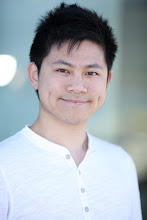
I've been getting a lot of emails recently about whether I am tutoring this fall. Yes. I will. Since I am in 3rd yr med now, I will be catastrophically busy. That means that I will determine very strict dates, times and meeting locations to run my lesson. For every lesson, I need a guarantee of at least 10 students showing up in order for me to teach. In the past I let students vote, but I can't do that anymore. I don't have time to eat, sleep, watch TV, or spend as much time as I want watching youtube clips. But of course that isn't a superlatif. I will still do those things, but just significantly less than what I'm doing now in my last real summer ever. Yes, the picture above is a picture of me. It captures me at the peak of my happiness and stress-free life before the onslaught of 3rd yr med school rotations. Fishing is also my favorite past time.

Lesson style: group of 10 students (sometimes 11-13), anyone can blurt out and ask me questions during my lessons, and no you are at no disadvantage in learning in a small group vs 1on1 tutoring. Lesson are minimum 2 hrs long.

Location: To be determined. If I'm nice, I will travel to campus (takes me 1 hr to get to UBC because I will be working at royal columbian hospital back in Lougheed area) to teach once every week. If I am free on the weekend, I will probably hold lessons on campus or I might try something new this year and get you to all come to my house in Burnaby and I'll be buying a huge white board. (I know many people who live in the Westside or on campus will complain and file an objection to this, but this is the inconvenience that you will have to take if you want to learn from me)
Cost: $40 per person for each 2 hr session.

Times/dates: totally up to me this time around. I will still be considerate of you guys, but I will be more considerate of myself first and foremost.

How you will be informed of lessons: email me tsangt@interchange.ubc.ca with your full name. You will then be on my email list. Anytime I plan a new lesson, I will send you all the details and you reply by email if you want to join. If I get at least 10 people serious about wanting the lesson, a confirmatory email will be sent out and the lesson will run accordingly.

Most of your questions about my approach, who I am, what I do, what I think, is very likely to be answered in one of the posts in this entire blog. So please just surf thru the blog if you're interested in knowing more. I have been very thorough and comprehensive in this blog.

If you are wondering. Yes I am good at teaching chem 233. I am confident to say I am one of the best o-chem tutors currently on the market. I back-up my grandiose claims with now at least 4 terms of tutoring groups and running these lessons in small groups of 10. Before that, I tutored 1on1 for 2 terms. If you prefer clear, direct and precise teaching, that is my way. I do not have time to waste on anyone or myself with information which will not serve you well in succeeding in this course. I do not make guarantees, but if you listen to my words, actually pay attention, actually study like a good student with the right attitude and effort to practise (not just becoming of this 3 weeks before your final exam), it is highly probable that you will do well. How well? That's again, up to you to decide. It's about time people realize that tutors cannot pull A's out of a magic hat. In the end, it is up to the student themselves to accomplish this. I am only your consultant, your coach whom you have hired to give you timely and salient advice to help you win your own battles in life.


Sunday, April 18, 2010

REGISTER

Hi CHEM 233 STUDENT!

It's that time of year again. It has been shown in history (see my analysis of CHEM 233 grade trends below for the past 10 years) that the rumours are false that so many students fail CHEM 233 and can find no way of redeeming themselves on a 2nd effort. The truth is that a lot of people fail the midterms. Almost all students pass in the end just like in any other course at UBC. The caveat is that a lot of students pass with a low grade (a lot of students in the range of 50-80%). It doesn't matter if you're born smart or not. It doesn't matter if you've gotten 90%+ in all your other subjects up till now. Doing well in this course requires most students to change the way they approach a course. The bottom line is that CHEM 233 is a very unique and different course from other science courses at UBC and it therefore equally demands a different approach to do well in. I understand the approach to doing well and I am confident that students who learn under me will come to realize, appreciate and put this proper mentality in focus to achieve success. You don't have to be naturally smart to get my teaching and my ideas because I myself am not a genius. However, what I am smart at is making wierd/abstract things simple and easy to me because I personally can't understand a lot of the confusing things out there in this world, especially all the complicated stuff we have to learn in University. Unlike a lot of students who do well in University, I am able to solidify and tell you in concrete words what it takes to succeed in CHEM 233 and in life.

Please peruse this blog, which I have spent many hours creating to grab tips and information on everything that has to do with CHEM 233 and succeeding in it. I hope it's useful for you.

I am charging $40/person for each 2 hr session.

Register by sending me your 1) full name and 2)student year to tsangt@interchange.ubc.ca
and you will be notified of upcoming lessons.

Sunday, September 6, 2009

A Lion's WELCOME


Welcome to my blog on ALL things to do with CHEM 233 at UBC including tips on good study habits and information about the course that I believe will give you a greater shot at success at this course. Please understand that my aim is not to simply cater to those who just want to pass this course, but help students who want to achieve and stand out make it. Whether you just want to pass CHEM 233 or whether you want to be the top of your class, I got something valuable to offer you. As you'll realize after reading my blog, most people don't fail CHEM 233, but they end up with a disappointing mark. My goal is to push you and bring your awareness to a new level of thinking that will hopefully resonate with you and transform into true mastery and success in this course.

If you want details on how the tutoring program will run and what exactly it involves, please scroll down to the last posting on this blog to find that information.

Saturday, August 22, 2009

The Importance of the Big Picture and the question WHY

As you move onto 3rd year and beyond, you’ll encounter a lot of profs telling you to always look at the bigger picture. Quite simply, a lot of people don’t realize the power of this – to see everything from a bird’s eye view. In business schools everywhere, profs always ask their students what the “bottom line” is after a detailed discussion of some idea or concept. And a lot of times, most of the class sits there flabbergasted in silence without an answer. You have the few who see the big picture right away and as a result summarize all the details into one clear statement that everyone can understand as soon as they hear it. I’m sure all of you have experienced this before sitting in your classes whether they be business or science courses. At that very moment, you realize the power of reducing everything down to its most core and basic principle – a straightforward rule that anyone can grasp. And this is what sets those who score 90%+ in courses as opposed to everyone else. Anyone can study hard and get themselves all prepped up for their exam, but few can elevate their understanding beyond the superficial memorization and understanding of doing problems.

Seeing the big picture also goes hand-in-hand with knowing WHY something is. And I don’t just mean understanding WHY the concept is the way it is or why you do that problem like that. I mean WHY the hell are you learning this in the first place in this course. These are two very different things. To put it in perspective for all of you, let’s take an example to show you what I mean. BIOL 201. Why are there that many extra ATP made going through the TCA cycle? Next question you should ask: Why are we even bother learning the TCA cycle? I always constantly ask myself this question when I’m studying. WHY, WHY, WHY am I learning this? To give you some urgency on this matter, most of us only have about 21,170 days to live (if average life expectancy is 80 and most of us are in our early 20s). Life is precious and finite. If we are using up our life to learn something, it better be for a good reason and I better know why exactly I’m learning this stuff. As normal human beings, we’re always asking why to our friend’s facebook status says “John is feeling sad” or why to buying something when we’re making a purchase with our own money. But as students, we have been so accustomed to rote learning and exam mentality that has killed our interest in learning and always asking WHY we have to learn this. The A+ student always realizes the PURPOSE of learning something. Once you have reduced everything down to its core idea and knows its purpose, you can quite easily create a mental map of the entire course in your head and connect all the dots.

Sunday, August 16, 2009

Tips to Improve your studying habits for CHEM 233 and beyond

  1. Never leave CHEM 233 for last minute if you want to do well. This is not one of those courses where you just keep attending lectures all term, and then finally decide to put in some effort before the midterm and final. Speed and accuracy is part of the game when midterms come. And speed and accuracy can only be achieved with practice and time until you reach a level you’re comfortable with.
  2. Spend less time in the SUB sippin’ on Starbucks and chatting with your friends and do some practice problems instead. As President Obama says, ‘we can’t get something for nothing. We all gotta’ sacrifice a bit.’
  3. When you’re studying, always think BIG PICTURE.
  4. In the winter session as opposed to the summer session, you got time on your side. So that means you can actually crack open that thick text book of yours. My advice to you, DO NOT study the text book fully. No one has time to do this unless they live on campus and seclude themselves from all social life. ONLY use the text book when you’re in desperation of guidance as you’re studying/reviewing/doing problems, if you want to clarify something in your class notes or your prof speaks in Hebrew. My notes are usually messy, so a text book really helps because the reactions are drawn and laid out so neatly.
  5. Form study groups. This is not my personal style, but some people says this works, so I’ll say it too. I believe study groups only work in certain contexts.
  6. If you start out with a negative attitude towards organic chem, you’re going to hate it all throughout the term. You’ll never be great at something if you have a genuine displeasure in doing it. So I say, even if you detest CHEM 233 with every nerve in your body, pretend you like it and SMILE.
  7. On the previous note, if you force yourself to smile as you’re studying and doing practice problems, you’ll actually psychologically accustom your brain to liking and associating CHEM 233 with happy wonderful things in your life. Contrary to what you think, according to the book BLINK by Malcom Gladwell, scientific studies have shown that the process of being happy doesn’t start from an external stimulus that then translates into a smile on your face, it is rather the physical action of smiling that tells the brain you’re happy. People who force themselves to smile more for no reason are happier and less depressed. WIERD!
  8. And of course, in promotion of my tutoring program, if you need help or you want to stay ahead of the game, e-mail me at tsangt@interchange.ubc.ca and SIGN ON UP!

So what`s this business about a ToolBox Method?


So I was sitting around with my friend’s really young daughter one day. And of course, I asked her who her favourite cartoon character was. She gave me two answers: Dora the Explorer and Bob the Builder. These are two very popular kids shows among our youngest children. For those of you who don’t know who Bob the Builder is, he’s just a friendly cartoon character named Bob and he builds things. But what I remember about Bob the Builder the most is that he always carried with him a tool box full of useful tools.And that is where I drew my inspiration for the highly revered teaching concept I dubbed the “ToolBox Method.” My students always ask me why I found CHEM 233 easy and how did I do well in it. Well, to tell you the truth, I never found it easy. I can only say it was easy now that I’m done with it and I succeeded, but I had to struggle thru it just like anybody else had to back then. So, I sat down one day and thought about exactly what was going through my mind in 2nd year when I was studying this course in particular. And I actually came up with something that anyone could use. You’d be surprised that you don’t need to be a genius to make this work for you. The ToolBox method is a pretty systematic and universal approach that most students can master and use to their advantage. One of my students said he could make his own tool box and doubted what I was doing was anything different, but after he attended my lesson (I usually wrap up everything with the final lesson on this ToolBox Method), he realized it was well worth his time to listen in on my mentality. So of course, I’m not going to give it away here. If you want to see the ToolBox method in action for yourself, register yourself for the CHEM 233 Continuous Tutoring Program!

WHY is CHEM 233 so hard?

Here’s my take on why students find CHEM 233 so hard and impenetrable. Personally, I think that UBC Organic Chem is one of the 2nd year courses that reflects the difficulty level of a 3rd year course in the sciences. Of course, Organic Chem is a very different from other courses content-wise, but the same general principles that dictate the “toughness” of the course still rings true. Remember how in first year, some of your profs told you that in order to be successful, you cannot rely on memorization alone anymore to achieve that high mark, but rather you need a complete and total understanding of the course and all the concepts as well (a.k.a. critical thinking). I majored in Microbiology so my 3rd year level courses cannot speak for everyone, but I saw a transition from 1st and 2nd year where you need less memorization and more critical thinking to 3rd and 4th year where you need BOTH memorization and critical thinking at extreme levels in order to succeed. And that’s why so many 2nd year students are caught off guard in CHEM 233. They treat it like any other 2nd year course where memorization can be relied on still quite heavily. For the first time in University - especially students with all their AP high school prep who developed a complacent stance on University courses having seen things before they were taught - they meet something totally new and challenging. This course is called a “weeder course” for a reason. They use it as an indicator of who has what it takes to thrive in science at least in this limited context. Who has developed a mature awareness and outlook on how one should properly attack a course in University? Just think of it as UBC doing you a favour - giving you a heads up on future years to come. And who doesn’t like a challenge sometimes? BRING IT!

I find a lot of students memorizing for the wrong reasons. You shouldn’t memorize for the sake of knowing how to do a question on the exam that you had encountered before in your practice questions. In upper year level courses, you memorize for the sake of learning a new language and becoming totally comfortable in conversing with it so when you’re sitting at your final exam, you actually know what the question is asking. I tell a lot of my students, really spend some time memorizing and getting to know the “organic chem language” as you’re doing your homework and studying throughout the term. This will make life a lot easier and you’ll be more intelligent in your conversations about organic chem between your classmates, profs and tutors. It makes for more efficient learning when you at least know the terms down well and have a decent understanding and picture in your head of what a word represents physically (ie. you know that a cube means a 3-D box with sides of all equal length, so why can’t you tell me what a alpha beta unsaturated enone is after you learn it?) My tip for you - translate words into physical meaning that you yourself can see in your head.